
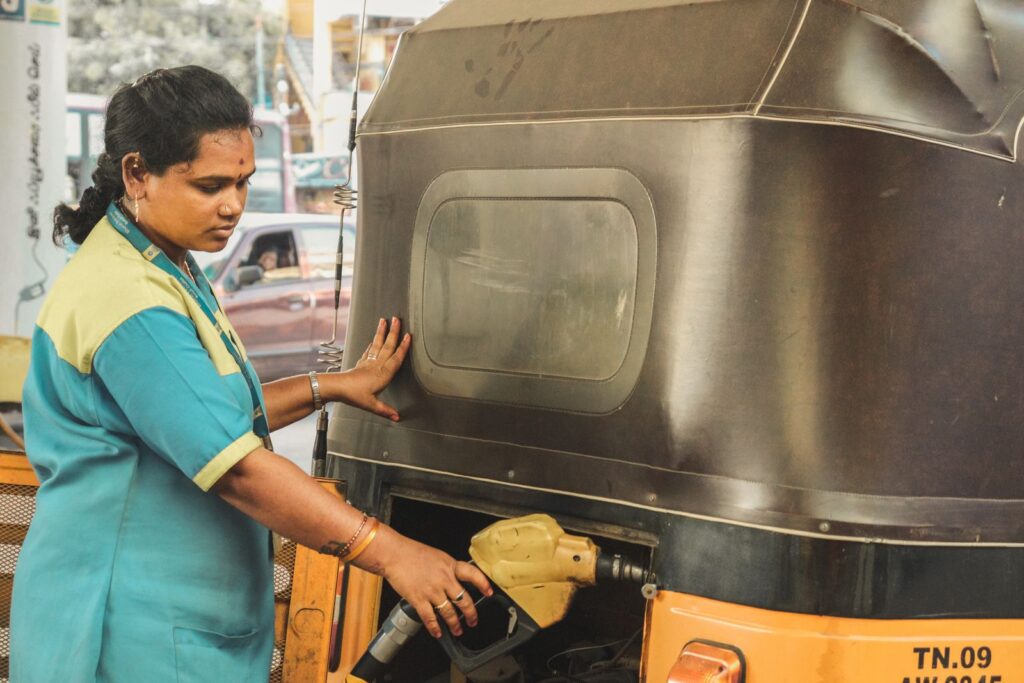
Fleets and CNG vehicles
CBG can be used in vehicles that run on CNG: buses, trucks, autos and taxis.
Ask about fleet supply
Three products from one biogas plant: clean fuel for industry and vehicles, and organic manure for farms. Tell us who you are and we will take you to the right one.
Representative image.
Renewable, methane-rich gas made from farm and agri waste, and delivered to your site in cylinder cascades. A cleaner way to fire the boilers and furnaces that run on LPG, diesel, furnace oil or PNG today.
Pick your current fuel to see what switching to CBG involves.
LPG and CBG are both gaseous fuels, so you keep your boiler or furnace. The burner and gas train are set up for methane instead of LPG, and the cylinder bank is replaced by a CBG cascade with a pressure-reducing skid.
Have ready: burner make and rating, and how many kg of LPG you use each month.
Get a quote to switch from LPGDiesel-fired equipment needs a gas burner or a dual-fuel burner to run on CBG. The boiler or furnace body usually stays; the burner, gas train and a cascade connection point are added.
Have ready: equipment type, burner details, and how many litres of diesel you use each month.
Get a quote to switch from dieselFurnace oil systems move to a gas or dual-fuel burner. Gas firing does not need the oil heating, day tanks and storage that furnace oil does.
Have ready: equipment type, burner details, and how many litres of furnace oil you use each month.
Get a quote to switch from furnace oilPNG and CBG are both methane-rich, so most PNG burners need only tuning. CBG reaches you in cascades, which helps where pipeline gas is not available or when you want a renewable source.
Have ready: burner details and your monthly PNG use in SCM.
Get a quote to switch from PNGFour steps from your first enquiry to a regular gas supply.
Tell us your current fuel, monthly consumption and the equipment it runs.
We check your burners, gas line and a safe, truck-accessible spot for the cascade.
Filled cascades arrive by truck and connect to your gas line through a pressure-reducing skid.
Empty cascades are swapped for full ones on a schedule matched to your use.
IS 16087 is the Bureau of Indian Standards specification for compressed biogas. These are the limits it sets for gas used like CNG.
| Parameter | IS 16087:2016 requirement |
|---|---|
| Methane (CH₄) | 90% minimum |
| Carbon dioxide (CO₂) | 4% maximum |
| CO₂ + N₂ + O₂ combined | 10% maximum |
| Oxygen (O₂) | 0.5% maximum |
| Total sulphur, including H₂S | 20 mg/m³ maximum |
| Moisture | 5 mg/m³ maximum |
Limits from IS 16087:2016. They are the standard’s requirements, not Synerva Energy test results. BIS has since revised the standard, so ask us for the current specification sheet with your quote.
Anywhere gas or oil is burnt for heat, and in vehicles built for CNG.
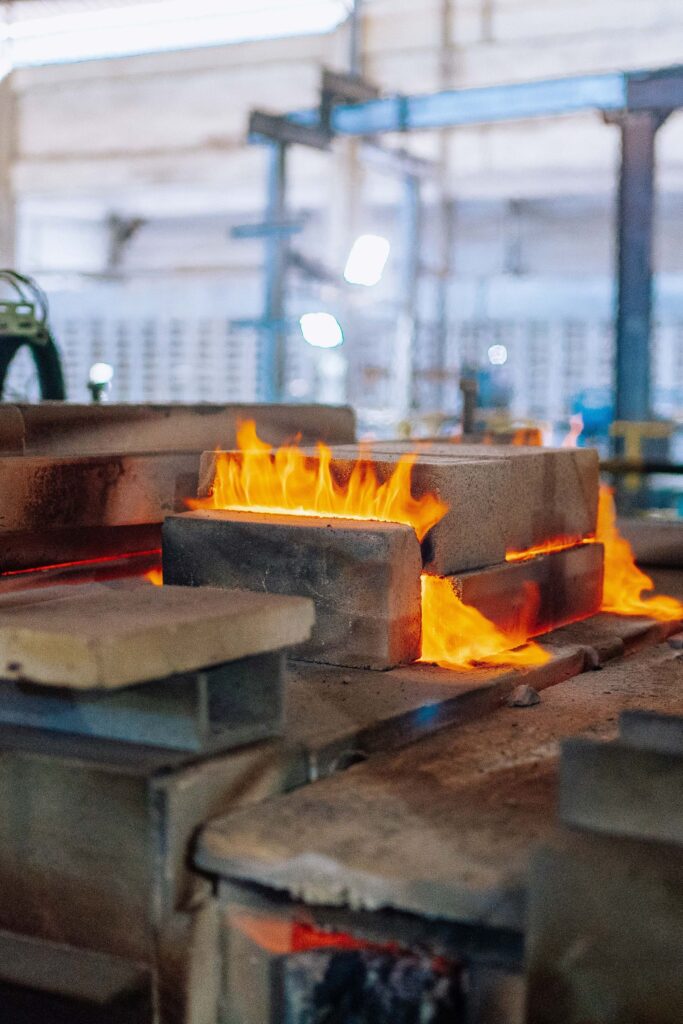
Most of the fuel a factory buys goes into heat. CBG can fire the same equipment, delivered in cascades on a schedule that matches your production.
Common in: food processing, textiles and dyeing, ceramics and glass, chemicals, and dairy plants.
Get a quote for your plantCBG can be used in vehicles that run on CNG: buses, trucks, autos and taxis.
Ask about fleet supply
Commercial kitchens, hospitals and campuses that cook on LPG or PNG today.
Ask about kitchen supplySolid organic manure from the digesters of our biogas plant. It adds organic carbon to the soil and helps it hold water and nutrients.
Pick your crop to see how FOM is usually applied.
Spread FOM evenly over the field and mix it into the soil during the last ploughing, 15 to 25 days before sowing.
Packs that suit this: 50 kg bags or loose bulk. The right quantity depends on your soil and crop, so ask us for a recommendation.
Get an FOM quote for field cropsApply in the furrows or broadcast and work it into the soil before planting, 15 to 25 days ahead.
Packs that suit this: loose bulk or 50 kg bags. Ask us for a quantity that suits your acreage and soil.
Get an FOM quote for sugarcaneMix FOM into beds or ridges during land preparation, 15 to 25 days before sowing or transplanting.
Packs that suit this: 50 kg bags. Ask us for a quantity that suits your beds and soil.
Get an FOM quote for vegetablesApply in a ring around each tree, under the outer edge of the canopy, and work it lightly into the topsoil.
Packs that suit this: 50 kg bags or loose bulk. Ask us about timing and quantity for your trees.
Get an FOM quote for orchardsMix FOM with potting or bed soil before planting.
Packs that suit this: small bags.
Get an FOM quote for my garden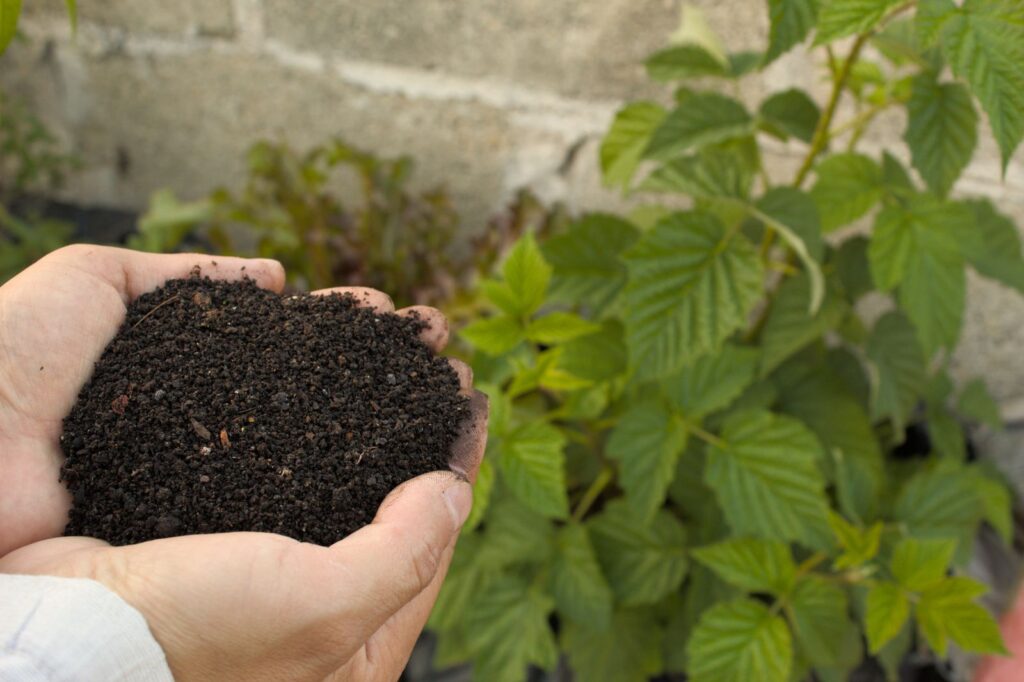
Organic manure works on the soil itself, not just the crop in front of you.
Fermented Organic Manure is covered by Schedule IV of the Fertiliser Control Order (FCO), 1985. These are the limits it sets.
| Parameter | FCO requirement |
|---|---|
| Total organic carbon | 14% minimum |
| Total N + P₂O₅ + K₂O | 1.2% minimum |
| C:N ratio | Up to 30 |
| pH | 6.5 to 8.4 |
| Particle size | 90% passes a 4 mm sieve |
| Conductivity | 4 dS/m maximum |
| Pathogens | Nil |
Limits from FCO Schedule IV as amended in July 2023, as quoted in public procurement tenders. They are the standard’s requirements, not Synerva Energy test results. Ask us for our product specification sheet.
The nutrient-rich liquid separated from digested slurry at our plant. Easy to apply through the drip, sprinkler or spray setup you already use.
Pick a method to see what it involves.
Dilute LFOM with water, filter it, and run it through your drip system so it reaches each plant’s root zone. Flush the lines with clean water afterwards.
Packs that suit this: 20 to 50 litre cans or drums. Ask us for the dilution that suits your crop.
Get an LFOM quote for dripMix diluted LFOM into the sprinkler supply to spread it evenly over the field along with irrigation water.
Packs that suit this: 20 to 50 litre drums or bulk tanker. Ask us for the dilution that suits your crop.
Get an LFOM quote for sprinklersPour diluted LFOM onto the soil around the base of plants or trees, or into furrows, so it soaks into the root zone.
Packs that suit this: 5 litre cans for small plots, 20 to 50 litre cans for fields.
Get an LFOM quote for drenchingSpray well-diluted, filtered LFOM onto leaves with a knapsack or tractor sprayer, ideally in the cooler part of the day.
Packs that suit this: 1 to 5 litre bottles or 20 litre cans. Ask us for the dilution before spraying.
Get an LFOM quote for spraying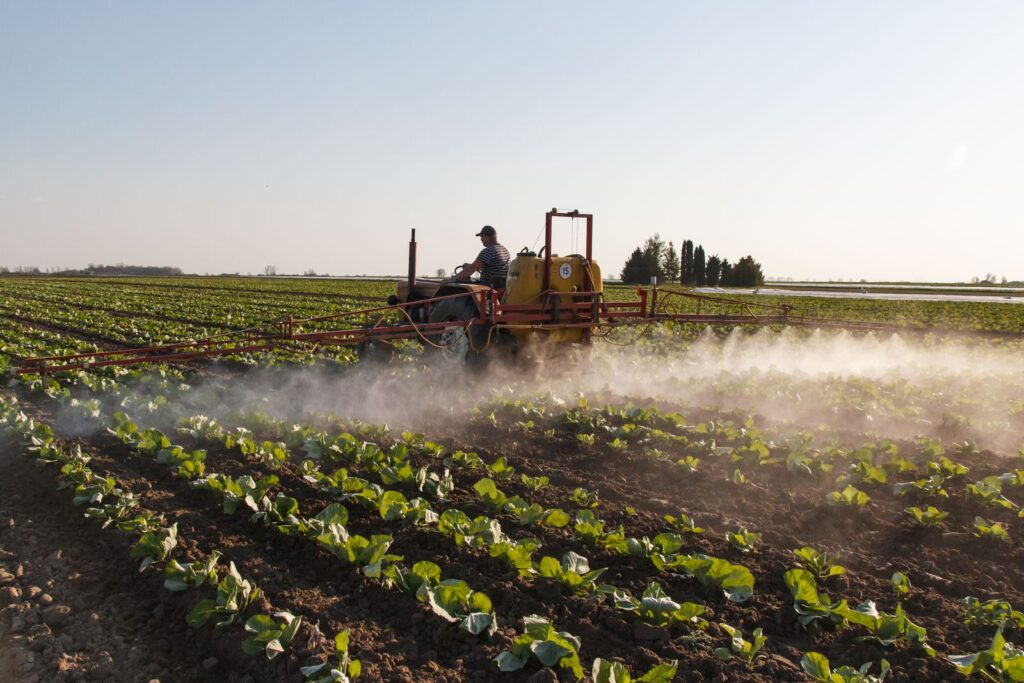
LFOM brings organic nutrients to farms that already irrigate or spray.
Liquid Fermented Organic Manure is also covered by Schedule IV of the Fertiliser Control Order. These limits were set by its July 2023 amendment.
| Parameter | FCO requirement |
|---|---|
| C:N ratio | Up to 30 |
| pH | 6.5 to 8.4 |
| Label instruction | Apply 15 to 25 days before sowing |
From the Fertiliser (Control) Sixth Amendment Order, 2023 (S.O. 3240(E), 19 July 2023). The full list of LFOM limits is in FCO Schedule IV. These are the standard’s requirements, not Synerva Energy test results. Ask us for our product specification sheet.
Stock our FOM and LFOM for farmers in your area. Tell us where you are and what you expect to sell, and we will talk you through terms.
Quick answers before you enquire. Still unsure? Call us and we will talk it through.
Both are mostly methane and are compressed and handled the same way. CNG comes from fossil natural gas, while CBG is made from organic waste, so it is renewable. CBG that meets IS 16087 can be used in place of CNG.
Usually not. Gas-fired equipment may only need burner tuning, while oil-fired equipment needs a gas or dual-fuel burner. We check this during the site visit before supply starts.
CBG is delivered in cylinder cascades by truck, and empty cascades are swapped for full ones on an agreed schedule. Price depends on quantity, delivery distance and supply schedule, so we quote per site.
FOM comes out of a controlled digestion process in sealed digesters instead of an open heap. The feedstock is fully broken down, so the manure is more uniform and easier to apply than raw or partly rotted dung.
Many farms use both: solid FOM worked into the soil at land preparation, and liquid LFOM through drip, sprinkler or spray during the season. Tell us your crop and irrigation setup and we will suggest a combination.
It depends on your crop, soil and current fertilizer use, so we recommend quantities per farm rather than one figure for everyone. Choose your crop in the enquiry form and we will advise you.
Both. FOM comes in small bags, 50 kg bags and loose bulk; LFOM in 1 to 5 litre bottles and cans, 20 to 50 litre cans and drums, and bulk tanker.
Yes, we supply across India. Delivery terms depend on the product, the quantity and your location, so share your state and city in the enquiry form and we will quote accordingly.
Our team will call you on the number you shared to confirm your requirement. If it's urgent, call us on +91 99118 25510.